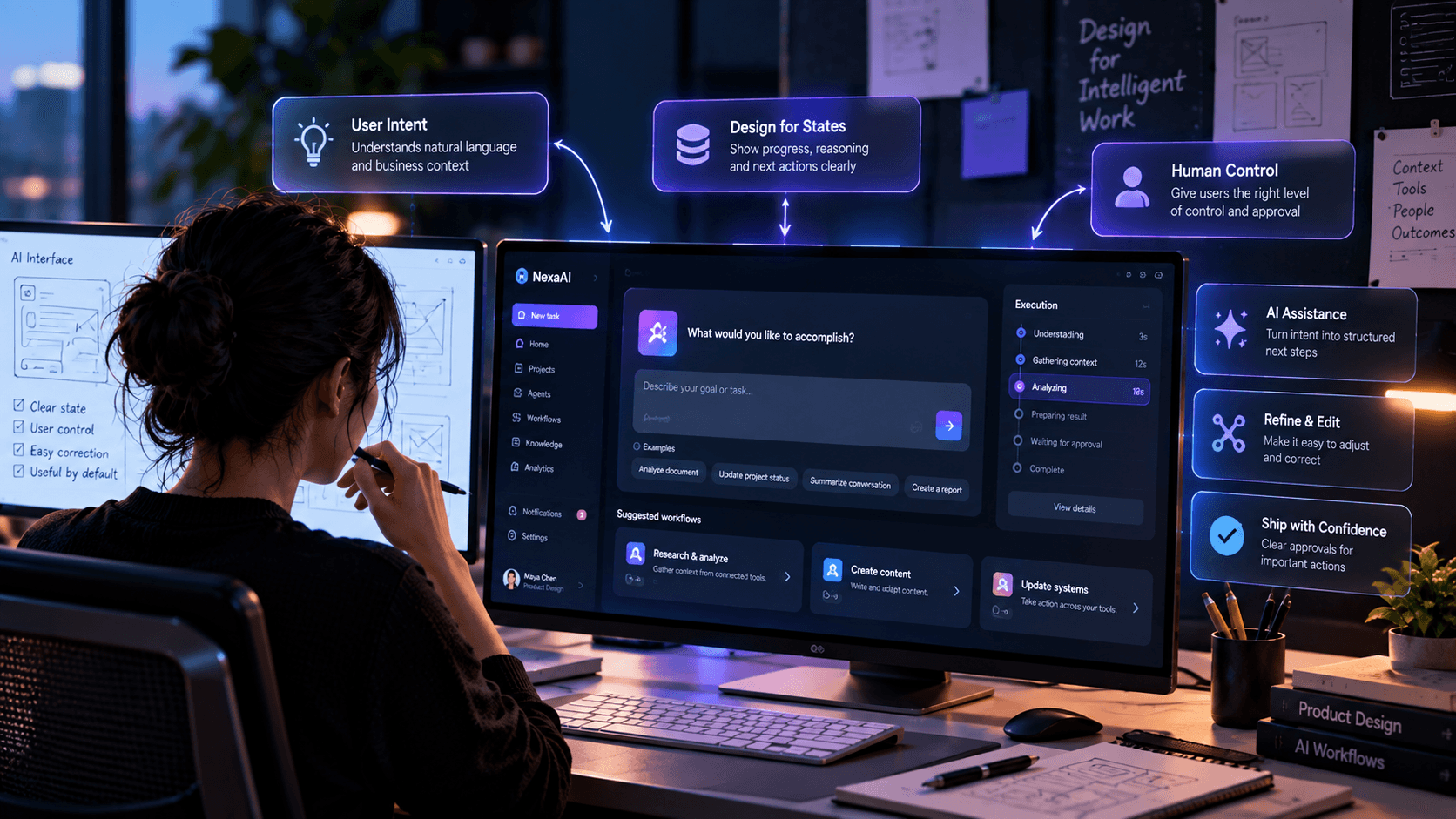
Automation becomes valuable when it removes repetitive coordination without removing the judgment, accountability and context people still need.
Automate predictable decisions first.
Risk should determine approval requirements.
Every important action should leave a visible trail.
01 · Control
Think of automation as a spectrum
Workflows do not need to be either completely manual or completely autonomous. Most useful business processes sit somewhere between those extremes.
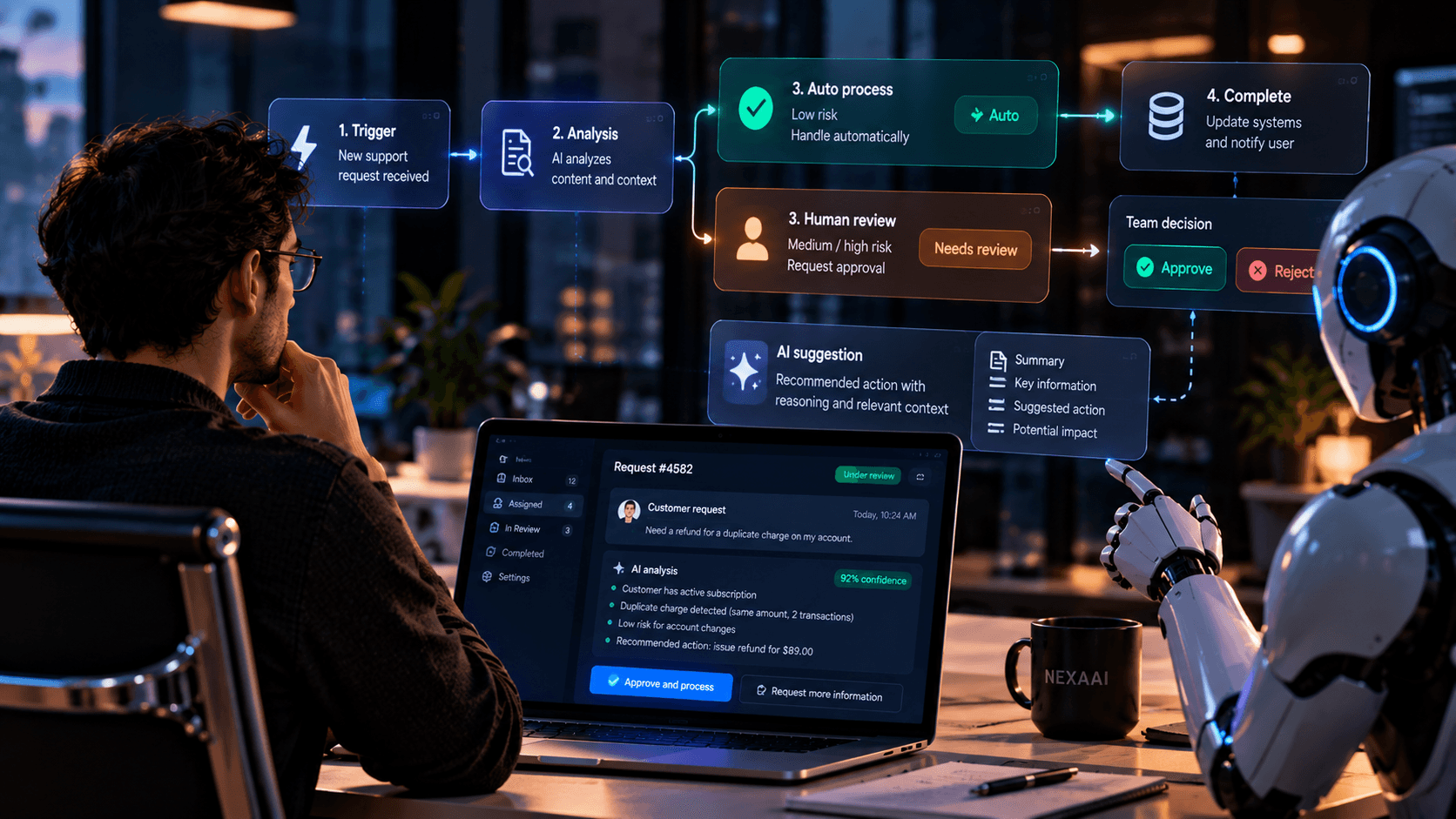
A system might automatically classify incoming work, recommend an action and wait for a person before performing a sensitive change.
Automatic low-risk actions
Recommendations for uncertain decisions
Explicit approval for high-impact changes
02 · Risk
Let risk determine the checkpoint
Approval design becomes easier when teams classify actions by consequence rather than applying the same rule everywhere.
Reading information, drafting content, changing a customer record and transferring money should not share the same permission model.
03 · Visibility
Invisible automation becomes difficult to trust
Teams need to understand what happened, what triggered it and which system changed. Clear activity history makes automation easier to debug and easier to trust.
The strongest systems make automation feel observable rather than mysterious.
Trust increases when people can inspect the important decisions a system makes.
“The goal is not maximum automation. It is the right amount of automation for each decision.”
NuvoraAI Editorial
In practice
Key takeaways
Use different control levels for different actions.
Keep high-impact decisions reviewable.
Make automation history easy to inspect.
Written by
Daniel Reed
Engineering · NuvoraAI