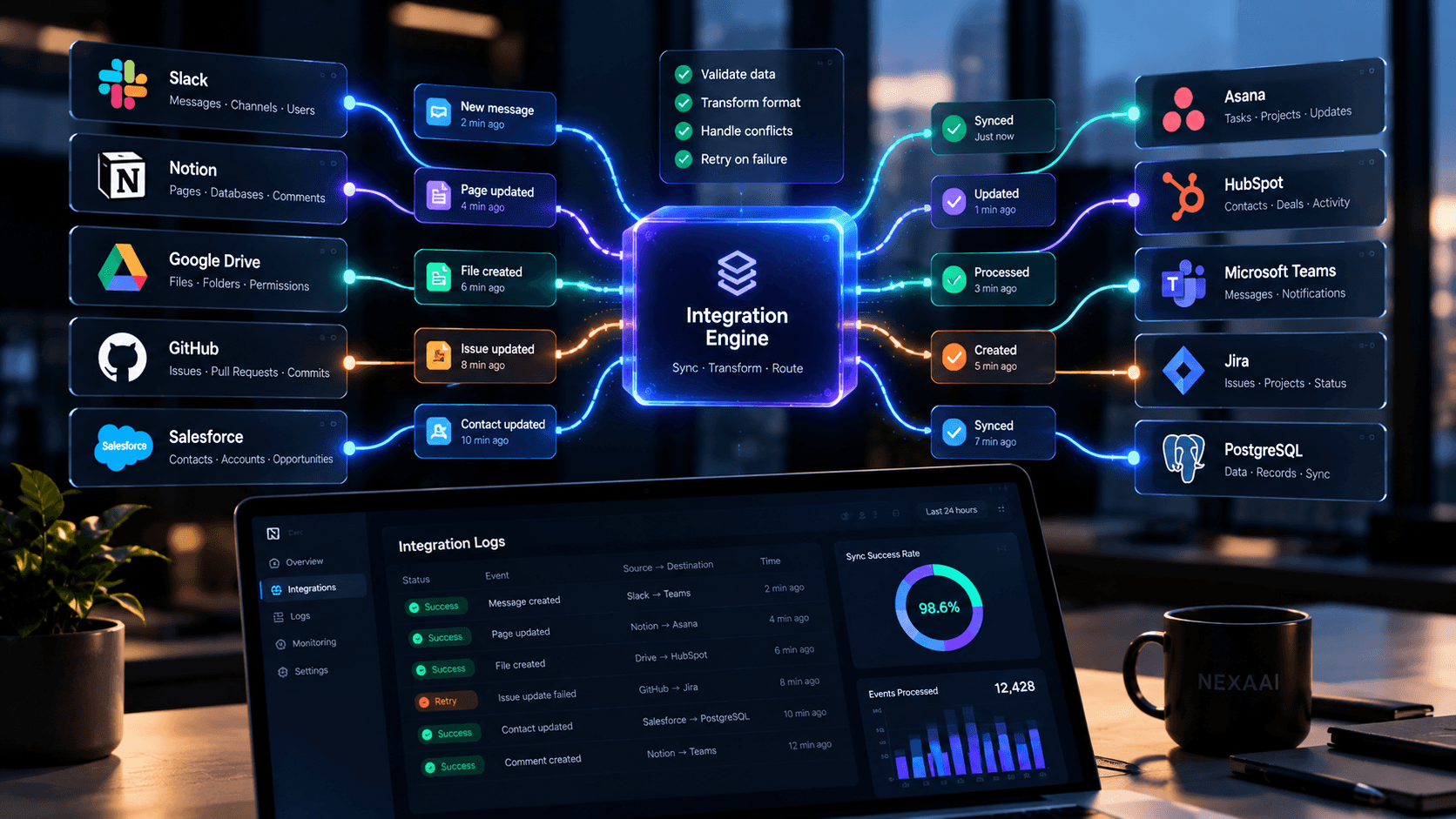
Integrations look simple when everything succeeds. Reliability becomes visible when networks fail, data changes shape or two systems disagree.
Retries should be expected.
Synchronization needs conflict rules.
Observability should be built into the integration.
01 · Reliability
Assume external systems will occasionally fail
Requests time out, APIs become unavailable and credentials expire. Reliable integrations treat those conditions as normal operational states.
02 · Data
Define synchronization rules clearly
Two-way synchronization creates difficult questions when both systems change the same record.
Define field ownership, update precedence and conflict behavior before relying on the sync in production.
Source ownership
Field mapping
Conflict strategy
Retry behavior
03 · Operations
Make failed integrations easy to understand
A useful integration log should show the trigger, payload, attempted action, response and retry state without forcing engineers to search several systems.
“An integration is dependable when failure is an expected state the system knows how to handle.”
NuvoraAI Engineering
In practice
Key takeaways
Design for external failure.
Document conflict rules.
Make integration health observable.
Written by
Marcus Reed
Engineering · NuvoraAI